Amazonian mushroom research and discoveries in 2026
· based on the channel Shroomverse
Key takeaways
- Amazonian mushroom first described in early 20th century scientific papers
- Commonly linked to cultural and ethnomycological studies in the Amazon region
- Recent research clarifies taxonomy and historical naming conventions
- Shroomverse video tracks original papers and clarifies naming confusion
- Amazonian mushroom remains significant for biodiversity and ethnobotanical research
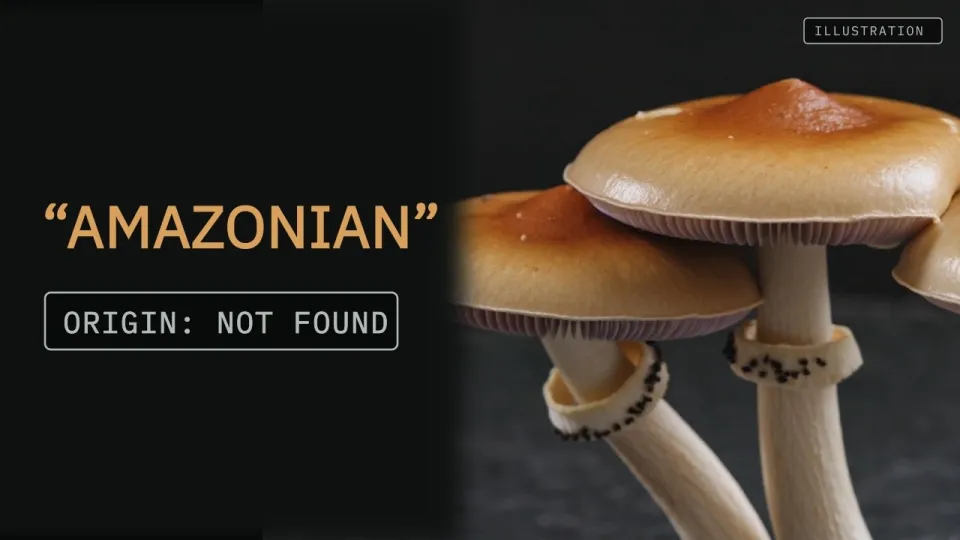
Video: Amazonian Mushroom: Following the Paper Trail Behind the Name
The Amazonian mushroom has been a subject of scientific and ethnobotanical interest due to its unique properties and historical significance in the Amazon region. Research in 2026 continues to explore its taxonomy, cultural use, and the origins of its name through a detailed examination of historical scientific literature and field studies.
Understanding the Amazonian Mushroom and Its Name
The term "Amazonian mushroom" refers to a group of fungi native to the Amazon rainforest, often associated with indigenous uses and diverse species that thrive in this biodiverse ecosystem. The name has appeared in various scientific papers dating back to the early 20th century, where researchers attempted to classify and describe these fungi based on morphology and ethnographic data.
Tracing the Paper Trail Behind the Name
The detailed investigation into the Amazonian mushroom's nomenclature reveals a complex history involving multiple scientific descriptions and occasional misattributions. Early mycologists documented these mushrooms primarily through specimen collections and field notes, which were later published in journals focusing on tropical mycology and ethnobotany. This historical paper trail helps clarify which species have been traditionally called Amazonian mushroom and distinguishes them from similar fungi in other regions 02:15.
Taxonomy and Classification Updates
Recent studies have utilized genetic sequencing to better classify the mushrooms traditionally labeled as Amazonian. This has led to reclassification of some species and identification of new ones within the region. The advancements in molecular biology have resolved long-standing ambiguities in species boundaries and helped scientists understand evolutionary relationships among Amazonian fungi 05:40.
Cultural and Ethnobotanical Importance
Beyond taxonomy, the Amazonian mushroom holds cultural significance for many indigenous communities. It is often used for medicinal, spiritual, or nutritional purposes, and ethnomycological research continues to document these traditional practices. Understanding the cultural context enriches scientific perspectives and supports conservation efforts of both the mushrooms and the indigenous knowledge linked to them 08:00.
Challenges and Future Directions in Research
Despite progress, challenges remain in fully cataloging the Amazonian mushroom diversity due to the rainforest's vastness and accessibility issues. Researchers emphasize the importance of interdisciplinary approaches combining taxonomy, ethnobotany, and conservation science to protect these species and their habitats. Continued fieldwork and collaboration with local communities are vital for future discoveries and sustainable management 10:30.
Summary
The Amazonian mushroom is a fascinating subject at the intersection of science and culture. Following the historical paper trail behind its name reveals a rich legacy of research and traditional knowledge. Advances in taxonomy and molecular methods continue to refine our understanding, while ethnobotanical studies highlight its significance for indigenous peoples. This comprehensive approach ensures the mushroom remains an important focus of biodiversity and cultural heritage research.
The analysis and insights presented here are inspired by the Shroomverse channel, which provides an in-depth exploration of the Amazonian mushroom’s naming history and scientific context.
Source: Amazonian Mushroom: Following the Paper Trail Behind the Name · Markdown version
Questions & answers
What is meant by the term Amazonian mushroom?
The Amazonian mushroom refers to various species of fungi native to the Amazon rainforest, often studied for their unique properties and cultural uses by indigenous peoples.
How did the name Amazonian mushroom originate?
The name originated from early 20th-century scientific papers that described fungi collected in the Amazon region, though its usage has sometimes been inconsistent due to taxonomy challenges.
What recent methods have helped clarify the classification of Amazonian mushrooms?
Genetic sequencing and molecular biology techniques have been used recently to better classify Amazonian mushrooms, resolving ambiguities and identifying new species.
Why is the Amazonian mushroom important beyond scientific research?
It holds cultural and ethnobotanical importance for indigenous communities who use it for medicinal and spiritual purposes, making it significant for both biodiversity and cultural heritage.